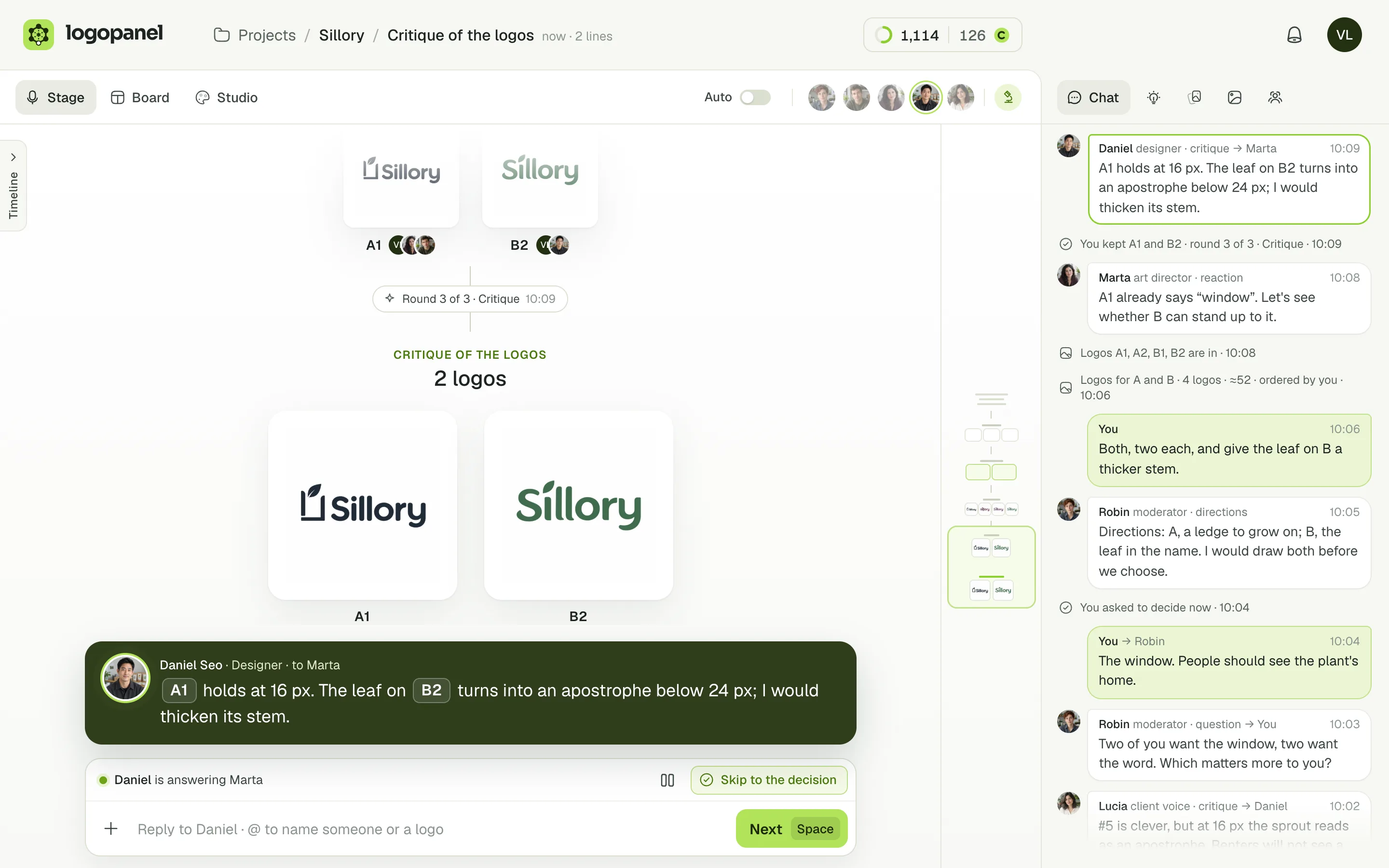
A brief is the only thing every specialist on the panel reads. The art director, the designer, the strategist and the critic each take something different from it, and the clearer it is, the less time the debate spends guessing.
You don't need to fill all six steps. Only the first one is required, and the model can draft the rest. This guide is about the parts worth writing yourself.
Start with what the brand does
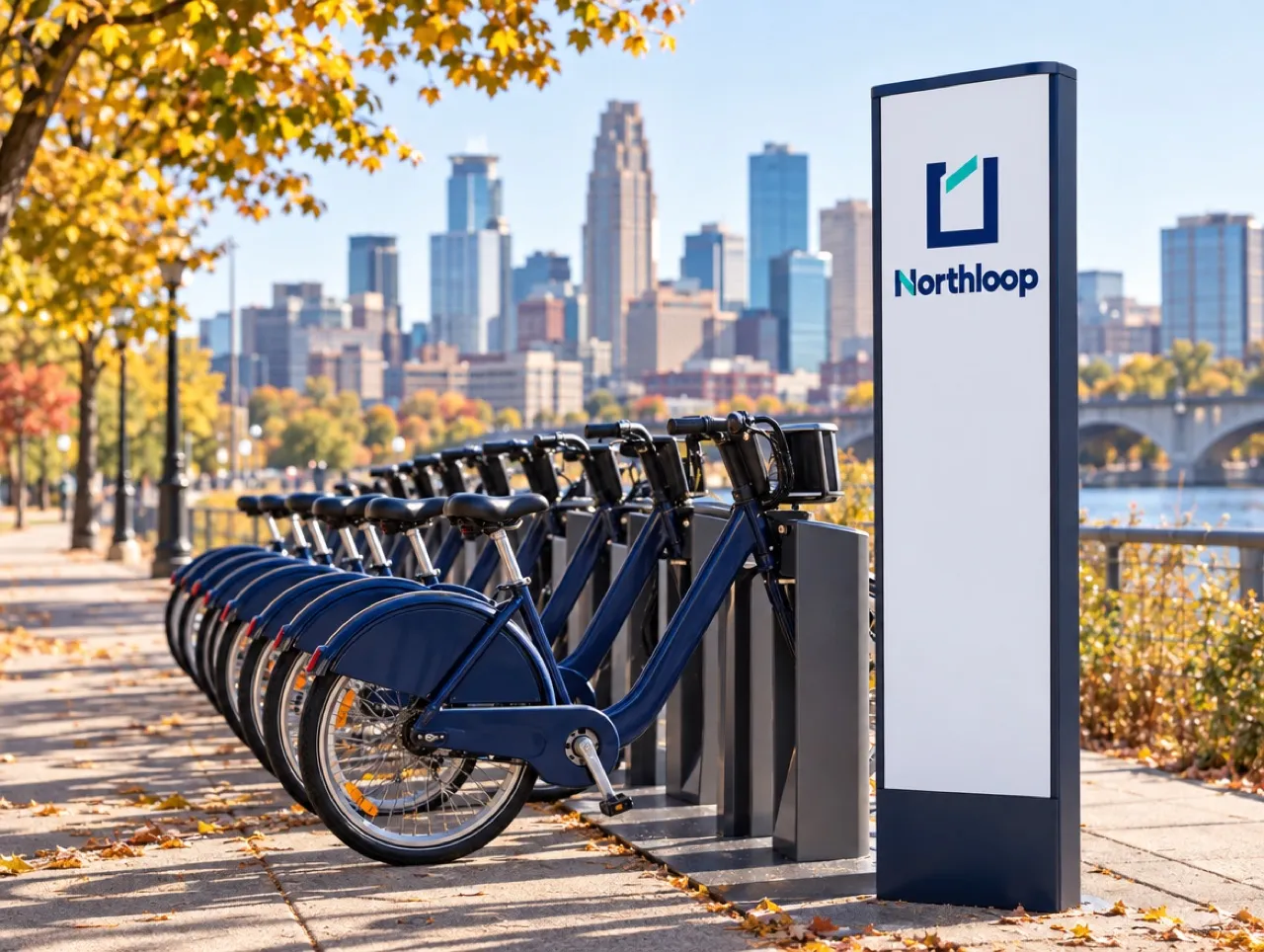
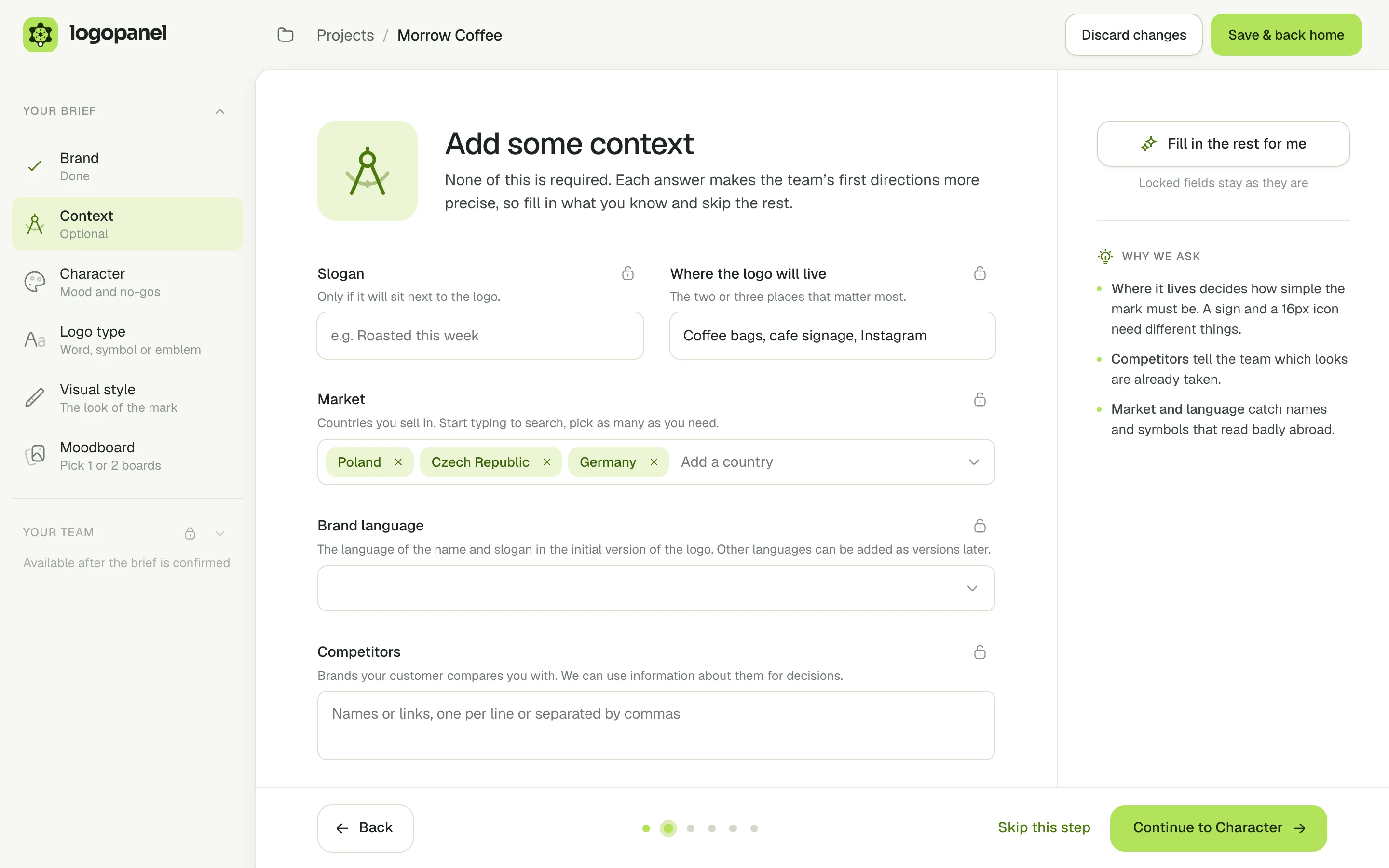
Write the name, what the brand does in one sentence, and who it's for. "A bike-share for a mid-size city, used by commuters and students" gives the panel more to argue from than "modern mobility brand".
The panel argues from facts. Give it one sentence about what the brand does, and every concept will answer to it.
Lock only what you're sure of
Every field has a lock. Lock what you're sure of, then press Fill in the rest for me: the model drafts the open fields and leaves the locked ones alone. If a suggestion is close but not right, edit it and lock it.
Say what to avoid
In Character, the model suggests moods for the brand and things to avoid. The avoid list is the part people skip, and it's the one the critic uses most.
- Name what your competitors already own: a colour, a shape, a kind of letter.
- Say which clichés you'd reject on sight. For a bike-share, that's usually a wheel.
- Add a mood you don't want, even if it sounds obvious. "Playful, but not childish" is useful.
Pick types and styles, not a picture
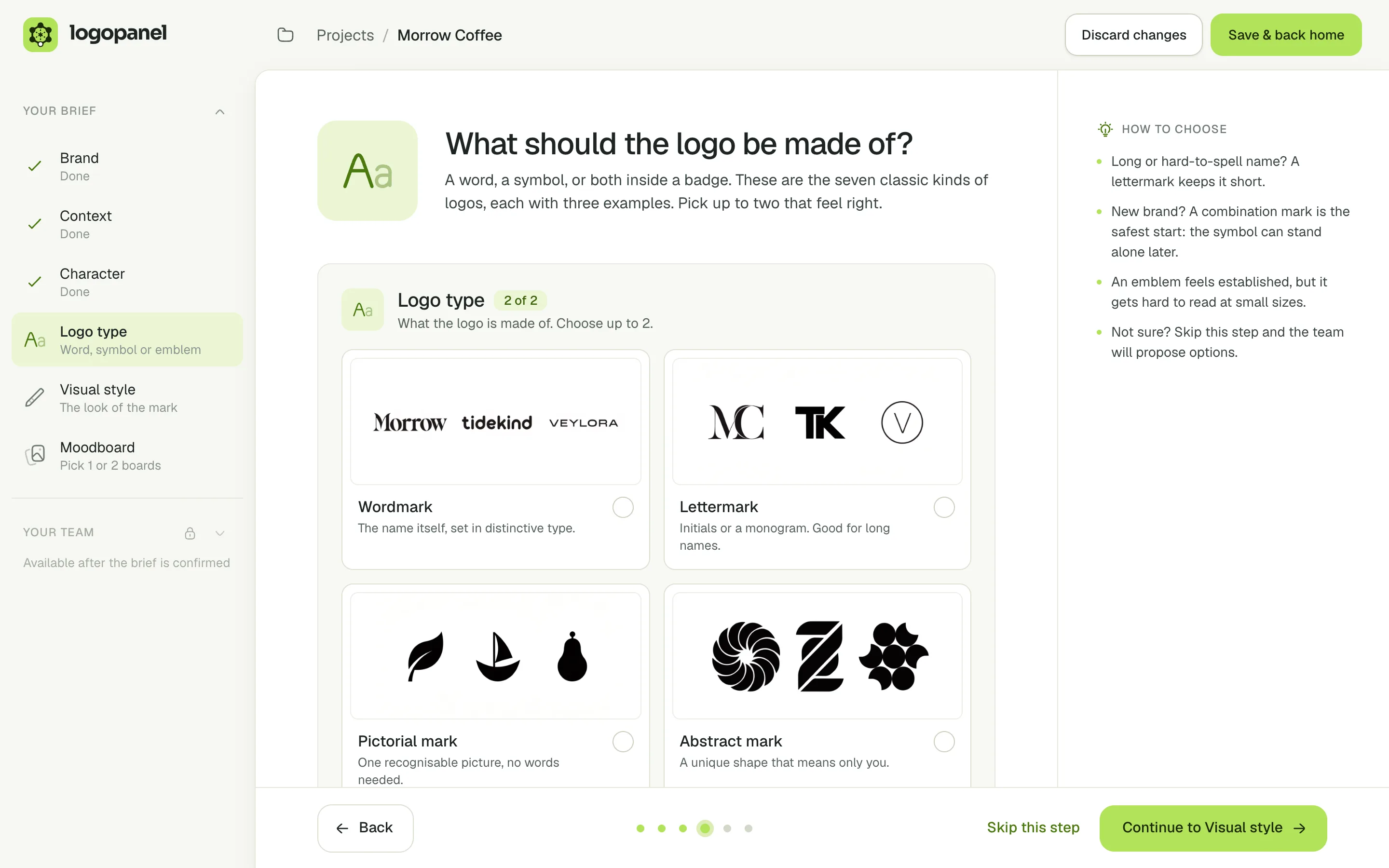
Choose up to two of seven logo types, from wordmark to emblem, and up to three of fourteen visual styles. Leaving them open is fine: the panel will propose directions across types and explain each choice.
Let the moodboard set the mood
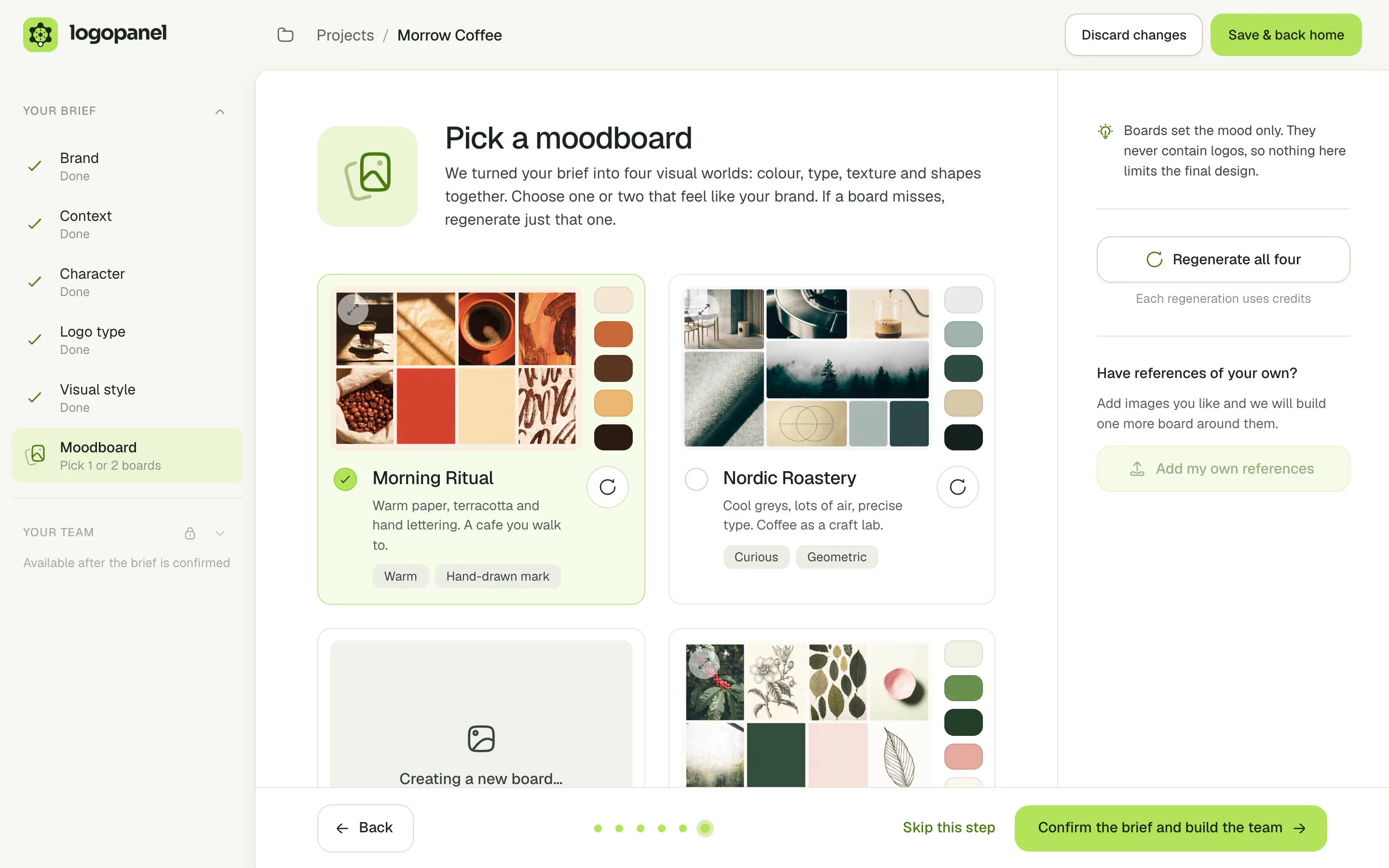
The last step draws moodboards: a collage, a palette and two words. Boards set the mood only and never contain logos, so you can react to a feeling without anchoring on a shape.
Check before the debate
- One sentence on what the brand does and who it's for.
- Locks on everything you're sure of.
- At least three things to avoid.
- Types and styles chosen, or left open on purpose.
That's enough for a good first round. Everything else you can change while the panel works.